Sell · Inherited Collections
Inherited a Collection? Start Here.
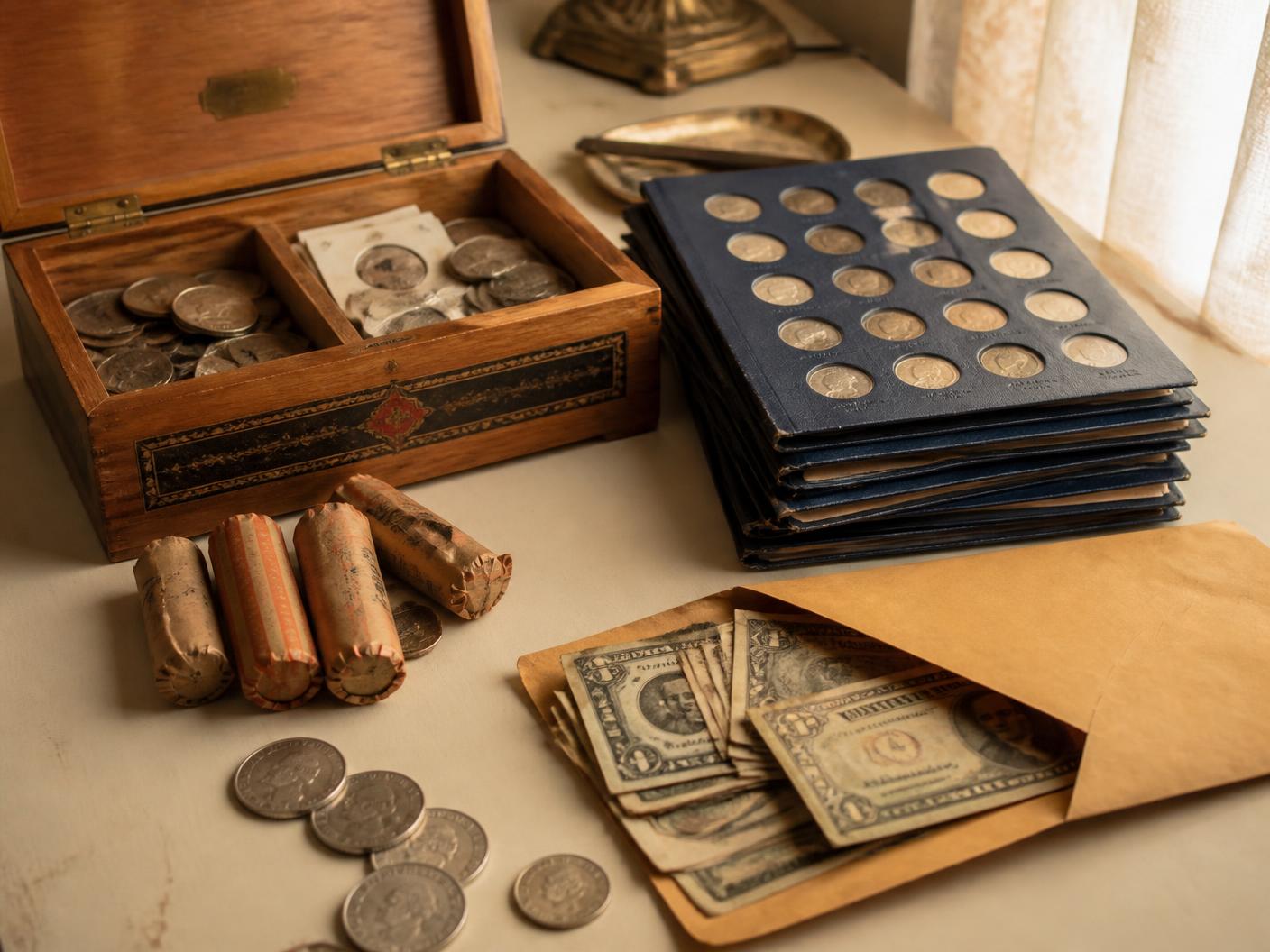
You don't need to know what you have. Most people who inherit a coin collection have never sorted through it, and that's completely normal. Bring it in as-is — boxes, albums, envelopes, and all — and we'll help you understand what's there before you decide anything.
How it works
Four steps, at your pace
Nothing here happens quickly unless you want it to. Each step exists so you understand the collection before any money or decision is on the table.
- 01
Understand What You Have
Bring it exactly as you found it — boxes, folders, albums, envelopes, safe-deposit bags. We sort and identify coins, currency, bullion, and certified pieces with you.
- 02
Get a Professional Evaluation
We review condition, dates, mint marks, metal content, and certification, then explain in plain language what drives value in your specific collection.
- 03
Explore Your Options
Keep it, insure it, split it among family, sell part of it, or sell all of it. We lay out each path and what it realistically means.
- 04
Decide Whether to Sell
You decide — same day, next week, or never. There is no pressure and no obligation to sell anything you brought in.
We can help you identify and understand:
- U.S. and world coins
- Paper currency and notes
- Gold, silver, and platinum bullion
- Certified / slabbed coins (NGC, PCGS, PMG)
- Albums, folders, and date sets
- Mint and proof sets
- Sterling silver and scrap precious metal
- Estate jewelry with precious metal content
- Items that turn out to have little value — we'll tell you that too
What we usually find
Most inherited collections look about the same
Not identical, but familiar. Here's what typically turns up, so you have some idea of what you're holding before you ever come in.
The everyday material
Rolls of wheat pennies, jars of circulated silver, mint and proof sets from the 1960s–1990s, and commemorative issues bought from television or mail-order ads. Usually modest in value, and we'll say so plainly.
The genuine keepers
Pre-1965 silver, gold coins, key dates in albums, certified slabs, older paper currency, and sterling. This is where most of the real value in an inherited collection lives.
The surprises
A single scarce date in an otherwise common folder, a foreign gold piece nobody recognized, or an envelope tucked into a box. This is exactly why we go through everything rather than weighing it.
Before you come in
A short list of do's and don'ts
Two minutes of reading here can protect real value. Nothing on this list requires any knowledge of coins.
Please do
- Bring everything together — boxes, albums, envelopes, loose change jars, and any paperwork.
- Keep coins in whatever holders they're already in, even if the holders look old.
- Bring old invoices, appraisals, certificates, or inventory lists if any exist.
- Bring a second family member if more than one person is part of the decision.
- Ask questions. Nothing is too basic, and we'd rather explain twice than have you guess.
Please don't
- Don't clean, polish, or scrub anything. Cleaning is the fastest way to reduce a coin's value, permanently.
- Don't remove coins from certified slabs or original mint packaging.
- Don't sort, discard, or separate anything you assume is worthless — let us look at all of it.
- Don't tape, glue, or write on holders, flips, or currency.
- Don't feel rushed into selling to the first buyer who quotes a number without explaining it.
How we handle it
Discretion, patience, and no obligation
Private by default
We don't discuss what customers bring in, and we don't add you to any list. Evaluations happen at the counter or in a quiet space, at your pace.
Time to think
Most evaluations take from a few minutes to an hour depending on size. Larger estates may take longer, and we'll schedule accordingly rather than rush.
No pressure, ever
You can take the information and leave with everything you came in with. That happens regularly and it's a perfectly good outcome.
What happens next
You decide — keep, sell some, sell all, or think about it
An evaluation is simply information. It doesn't obligate you to sell anything.
Keep it
Some people want to understand and preserve a collection rather than sell it. We're glad to help you catalog and understand it, no purchase required.
Sell part of it
Sell the pieces you don't want and keep the ones with sentimental or personal value. We'll help you separate the two.
Sell all of it
A straightforward path for collections with no sentimental attachment, or when settling an estate calls for a clean conclusion.
Think about it
Take the evaluation home and decide later. There's no deadline and no pressure to answer on the spot.
Common questions
Frequently asked questions
More background in our guide to inherited coin collections, or read how coin grading works.
Larger estates
Settling an estate?
If you're an executor, attorney, or family member coordinating a larger estate with multiple heirs or a sizable collection, our estate collections page covers timelines, documentation, and how we support that process.
Start here
Tell us about the collection
Not sure where to begin?
Bring it in as-is, or call and we'll walk you through what to expect before you come.